PUBLIC ART, PUBLIC MONEY, PUBLIC AMNESIA
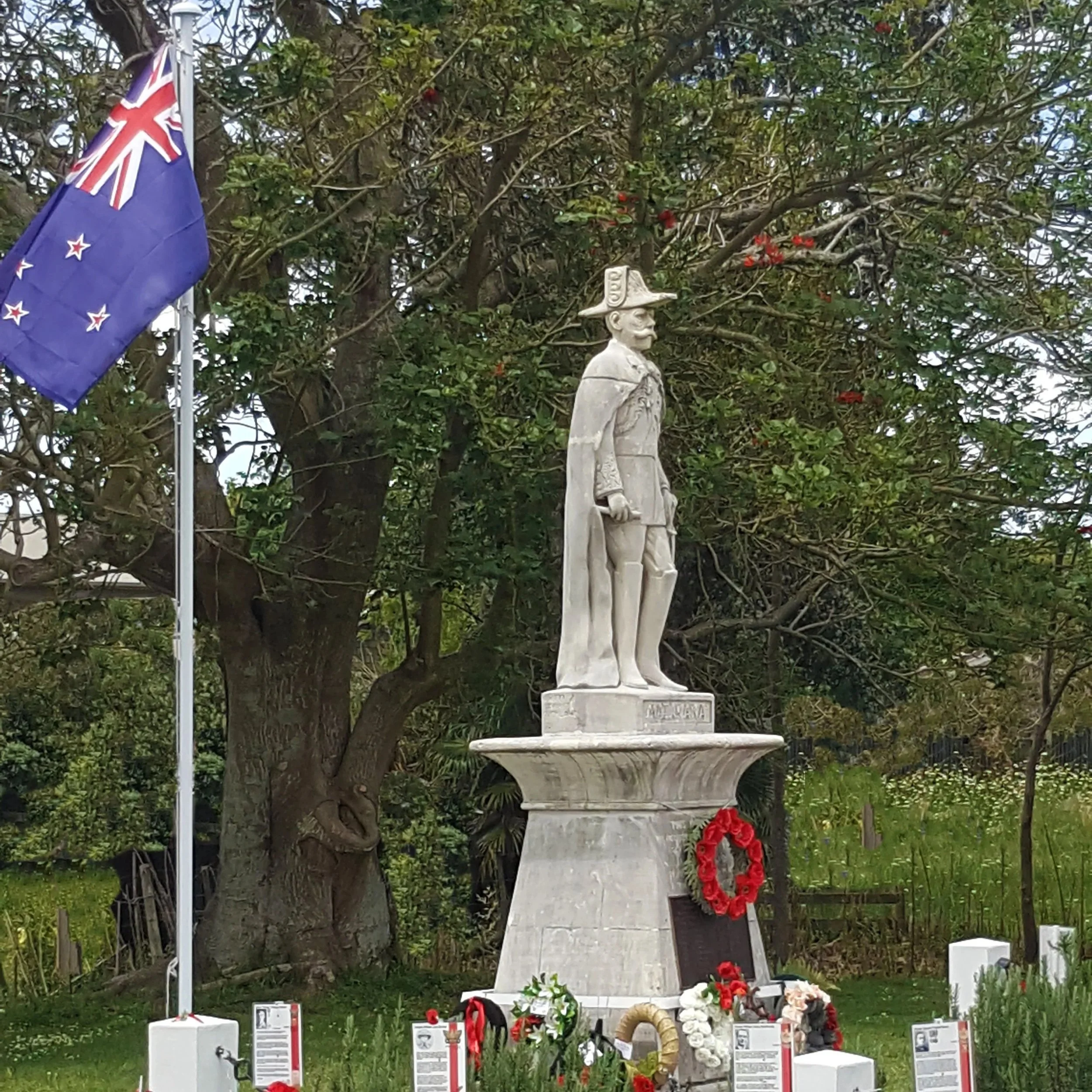
The Matakana War Memorial is heritage, a war grave, and a local landmark. It is all of these things. But it is also something else, and this is where the tension lies. It is public art.
Words Herb Campbell
That reality became impossible to ignore during the most recent act of vandalism, when the statue’s head was removed. The funds for the repair did not come from a veterans’ trust or a local RSA account. They came from the Auckland Public Art Fund, established to protect, conserve, and restore works of art in public space. The irony was sharp. The young man responsible was local. His act occurred five days after Anzac Day. He climbed over Anzac wreaths to do it. His mother, an artist, had previously stated publicly that vandalism of war memorials is healthy. Few moments expose a fracture in cultural understanding more clearly than this. Public art is not defined by taste. It is defined by purpose, placement, and public ownership. The Matakana War Memorial meets every test. It was commissioned by the community. It occupies shared space. It communicates meaning through form and symbolism. It was made to endure. That it also functions as a grave does not weaken its status as art. It deepens it.
At its centre stands King George V, carved with care and intent. This is not a decorative figure. The sculpture is restrained and precise. The king wears military dress, not ceremonial robes. His sword is lowered. His posture is still. In his right hand he holds a scroll, referencing the message that introduced the two minutes’ silence for the war dead. Every element carries meaning. This is sculpture as language.
The vandalism, and the response to it, reveal a deeper problem. When a war memorial is damaged and repaired through an art fund, we are forced to ask why the language of art has survived while the language of reverence has not. The system recognised value. The individual did not. This vandalism did not begin recently. It began in the 1970s and continued, intermittently, until 2022. These acts were not political statements. They were acts of disregard. Over time, the memorial shifted in the minds of some from sacred site to anonymous object. Once that shift occurs, vandalism becomes easier.
It is worth stating clearly what this memorial is not. It is not celebrating monarchy for its own sake. It is not promoting empire. It is marking loss. The men named on its base died in Gallipoli, France, Belgium, North Africa, and the Pacific. Many have no known grave. For their families, this memorial is where mourning happens.
Replacing the sculpture with something neutral or abstract would avoid narrative and discomfort, but it would also avoid responsibility. An obelisk explains nothing. This statue asks viewers to confront history as it was lived. The Matakana War Memorial has survived war, weather, and more than a century of social change. It should not have to survive neglect disguised as opinion. Restoration can repair stone, but it cannot repair indifference. If memory is to survive, the places that hold it must be defended. This memorial does not need to be replaced or reimagined. It needs to be respected.