MATAKANA WHARF: WHY WE ARE HERE
Words Adrienne Miller – Dedicated to Bill and Colin Jurkovich
The Matakana Wharf is not a leftover from another time. It is the anchor point of the village. This bend in the Matakana River fixed Matakana to the land. From here, roads met, homes followed, and the village took shape. Without the wharf, Matakana would not sit where it does today.
Built in 1879, the wharf gave purpose to the river. Boats arrived and left with timber, kauri gum, rock, firewood, and farm produce. Most cargo travelled south to Auckland, feeding a fast-growing city. Other vessels headed north to smaller coastal ports. The river was the road, and the wharf was the intersection. Where goods moved, people gathered. Stores and houses rose inland. Tracks became roads. The village grew from this single working edge.
The wharf shaped more than the economy. It shaped daily life. Steamers brought mail, supplies, visitors, and news. People met boats because that was where things happened. It was the social centre before halls or clubs. Children waited there. Families gathered there. In times of war, men left from the wharf. In times of loss, they returned the same way. In Shadows on My Wall, Errol Jones describes the sense of occasion when a steamer rounded the bend. Arrival mattered. Departure mattered too.
As timber declined and farming took over, the wharf adapted. Produce replaced logs. Steamers ran to a regular schedule. The Upper and Lower Matakana Wharves worked together to keep the district connected. Even when roads took over transport, the wharf remained the marker. It showed where Matakana began and why it existed.
By the early 2000s, that story was at risk. The Rodney District Council planned to demolish the wharf. It was seen as old infrastructure with no clear use. One local man understood what would be lost. Bill Jurkovich recognised that removing the wharf would erase a shared memory, not just a structure.
Bill acted quickly. He gathered friends and family. Letters were written. The message was direct: this place mattered. It held historic weight and deep social value. After review, the council agreed to a compromise. The concrete 1940s wharf would remain. The derelict store shed would be removed.
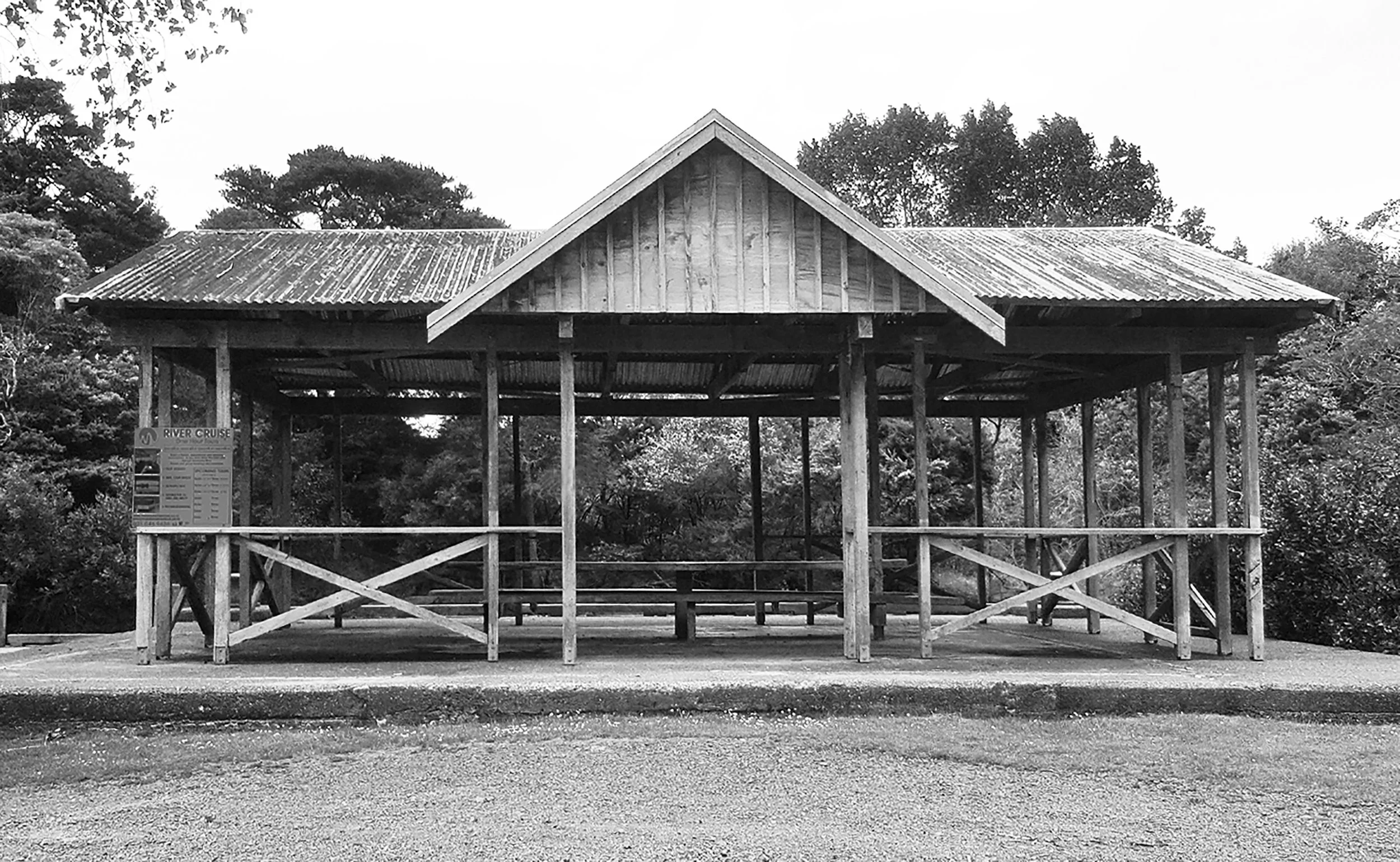
What followed was a local effort. Bill organised contractors, friends, and family to build the pavilion that stands today. Some timbers from the old wharf were salvaged and built into the new structure, carrying the past forward in a practical way. The pavilion is open-sided, roofed, and solid. At its centre sits a long Macrocarpa slab table, heavy and calm. It is a place to rest, talk, eat, or simply watch the river move.
Today, the wharf no longer handles cargo, but it still does its work. People meet there. They pause there. It remains the heart of village life. This place must not be forgotten. It is why we are here. It should be cherished, repaired, and cared for. The wharf is not a decoration. It is Matakana’s beginning, still standing.